
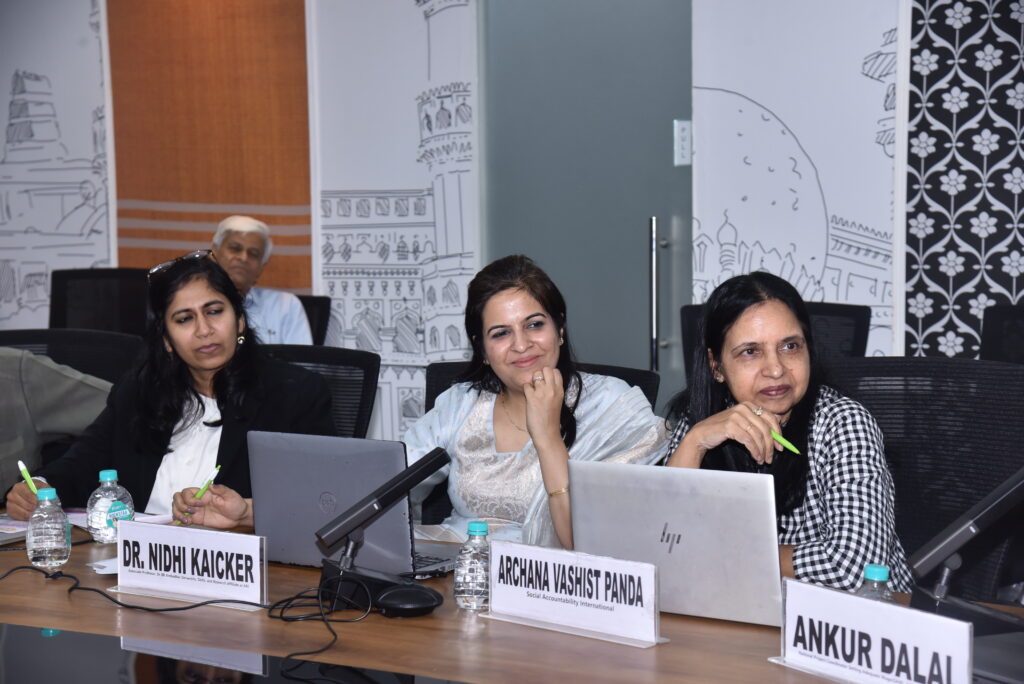
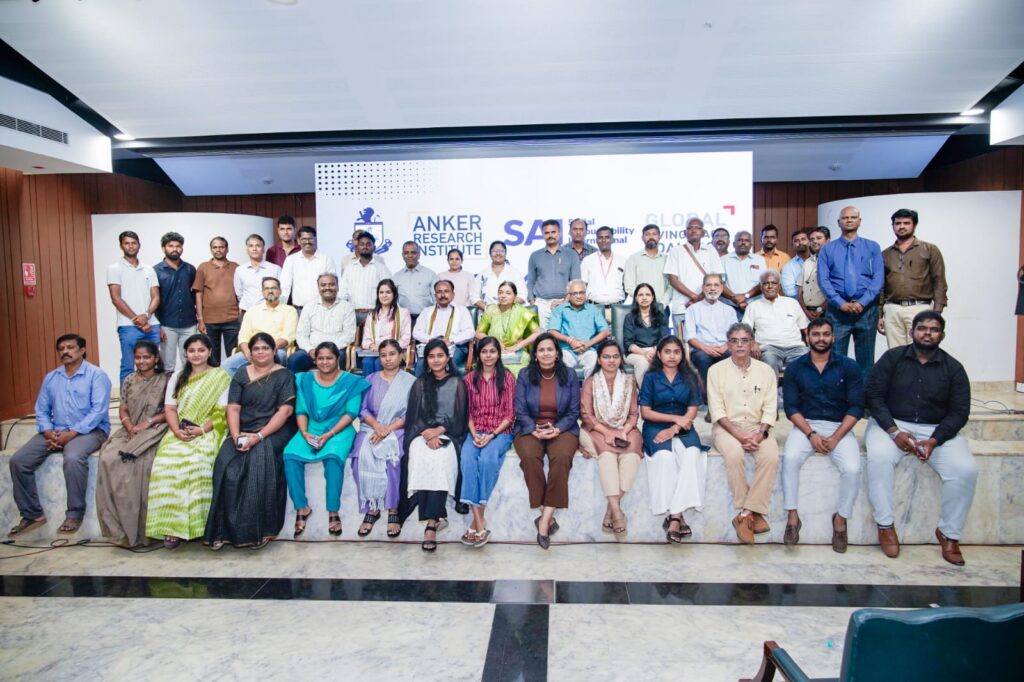
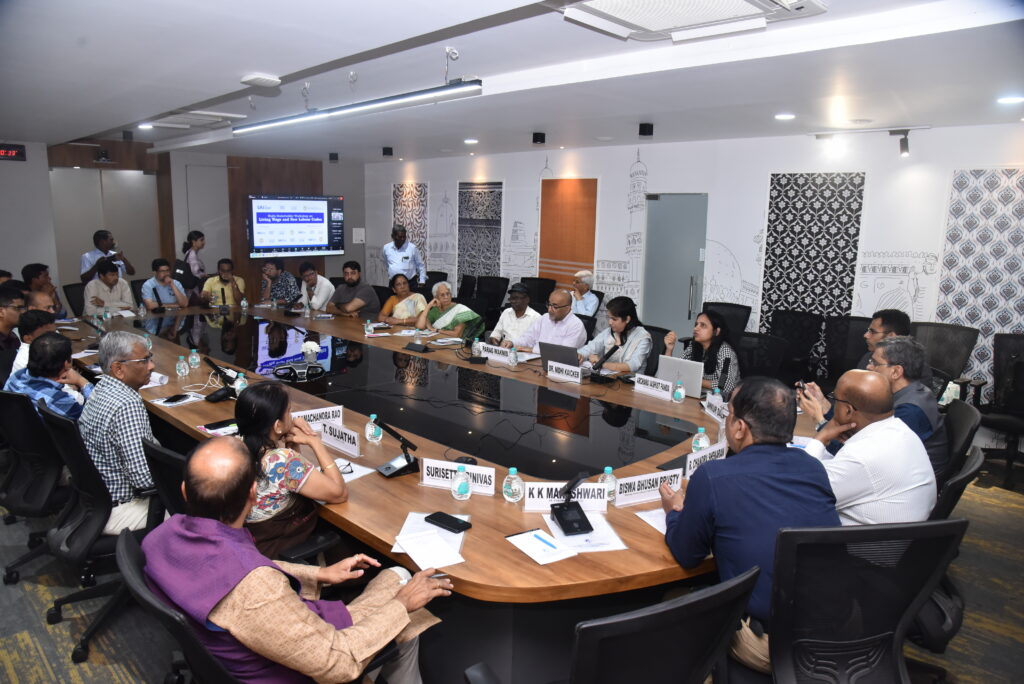
Between February and April 2026, SAI and the Anker Research Institute (ARI) convened a series of multistakeholder consultations in Hyderabad, Bengaluru, and Chennai, India to present new living wage research findings and examine how these benchmarks align with India’s New Labour Codes. Organized in collaboration with the The Federation of Telangana Chamber of Commerce & Industries (FTCCI- Hyderabad), The Bangalore Chamber of Commerce and Industries (BCIC-Bengaluru), and The Southern India Chamber of Commerce and Industries (SICCI-Chennai), the workshops brought together government officials, industry leaders, academics, trade unions, and legal experts to examine existing wage systems against the lived realities of workers and their families.
Grounding Wage Discussions in Local Realities
A central theme across all three cities was the importance of grounding living wage discussions in evidence and contextual understanding, rather than relying on generalized national figures. India’s economic diversity—varying costs of living, social structures, public infrastructure, and industrial ecosystems—makes localized research and stakeholder validation critically important. Representatives from ARI presented findings developed through extensive fieldwork and data collection, covering components such as nutrition standards, housing conditions, healthcare, transportation, and education costs.
Participants highlighted that factors like family structures, elderly care responsibilities, and state welfare provisions differ significantly across regions and directly shape household expenditure. Stakeholders actively engaged with the research methodology, offering feedback that strengthened the credibility and contextual relevance of the benchmarks — a validation process that is also a defining feature of the Anker Methodology.
Dignity, Shared Responsibility, and India’s New Labour Codes
One of the most resonant themes across all three consultations was the recognition that workers today aspire not merely for survival, but for dignity, stability, and a better future for their families. Discussions repeatedly surfaced intergenerational aspirations — the desire to provide better education, healthcare, and opportunities for children — as a central motivation driving worker expectations around wages.
Healthcare emerged as a particularly urgent concern. In Chennai, participants pointed out that limited access to affordable public services often forces workers to rely on private medical care, resulting in significant out-of-pocket expenses and financial vulnerability. Wages, participants stressed, are not simply an economic figure—they are a tool that directly shapes health outcomes, educational opportunities, and long-term household resilience.
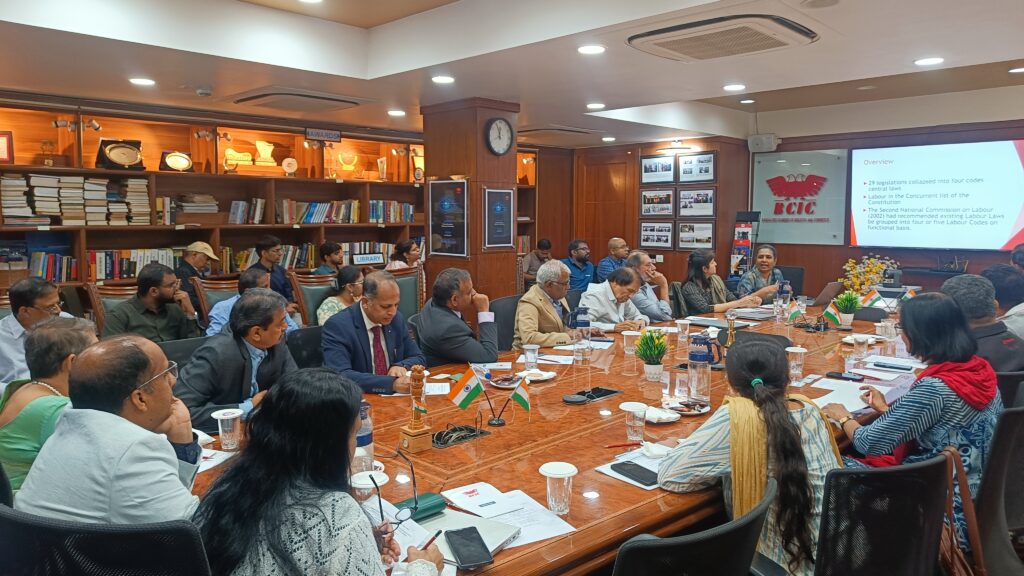
These human realities made the parallel discussion on India’s New Labour Codes even more significant. With India at a critical phase of labor law transition, stakeholders recognized that the implementation of the new codes will have far-reaching implications for wage structures, social security, and industrial relations. There was strong consensus that this legislative moment presents a timely opportunity to move beyond minimum legal compliance, embedding living wage considerations into future wage-setting frameworks rather than treating them as an afterthought.
Participants consistently emphasized that neither the New Labour Codes nor living wage progress can be advanced by any single actor. Bridging the gap between legal minimum wages, prevailing market wages, and living wages requires coordinated commitment from government, employers, brands and buyers, industry associations, labor representatives, and civil society. This event was a demonstration of both the need and possibility for this kind of approach. Despite differing perspectives, stakeholders engaged constructively across the events and had a shared understanding that wage adequacy is fundamentally linked to decent work, human dignity, and long-term economic resilience.
The Moment Has Come for Living Wages
Across all three cities, participants acknowledged that minimum wages are often not sufficient to ensure a decent standard of living. At a time when India is witnessing rapid industrial growth, deeper global supply chain integration, and increasing expectations around responsible business conduct, the consultations reflected a growing consensus: living wages are no longer merely aspirational—they are a practical component of social sustainability, workforce resilience, and inclusive economic growth.
India can no longer position itself globally on the basis of low-cost labor alone. Stakeholders discussed that long-term competitiveness will increasingly depend on the ability to demonstrate fair wages, decent working conditions, and respect for worker dignity. In this context, SAI’s revised SA8000:2026 Standard—reflecting the growing global focus on worker wellbeing, ethical sourcing, and human rights due diligence—offers a timely framework for businesses navigating these rising expectations.
These consultations demonstrate that grounded, collaborative, and evidence-driven dialogue is both necessary and possible. Collectively, they contribute to India’s journey toward aligning statutory wages and labor reforms with the realities and aspirations of working families.
